The P word – why in communications we shouldn’t shy away from talking about poverty
Seren and Charlotte from the High-Rise team attended Resolve Poverty’s annual conference in Manchester to understand better how we can be tackling poverty in our communities through our work with all our clients, including in the private and public sector.
Taking place across two days, over 300 guests and 50 speakers came together from across the UK to explore local and regional action on poverty in the context of national policy developments, including the national Child Poverty Strategy. As a real living wage employer, it’s an issue we think is important and want to understand better.
One of the most important things that we learned is that everyone can easily help raise awareness and advocate for those living in poverty – by not shying away from the word poverty. Many people refrain from using the word, seeing it as politically loaded, but all practitioners at the conference believe we can only start fully addressing the problem when we shine a spotlight on the issues people are facing, and give a voice to the children and families affected by poverty.
Why local and regional communications and policy work is vital for tackling poverty
Many speakers stressed that local incentives and local anti-poverty strategies are more effective than national incentives. Specific, localised measures, tailored to the individual needs of each area, will have a higher impact than generic, nationwide policy.
Currently, only one in four councils in England have an anti-poverty strategy in place, despite the fact 21% of people in the UK are in relative poverty. With Resolve Poverty’s guidance, local and regional government can strengthen their anti-poverty activity, and central government can create the environment that enables them to maximise their impact.
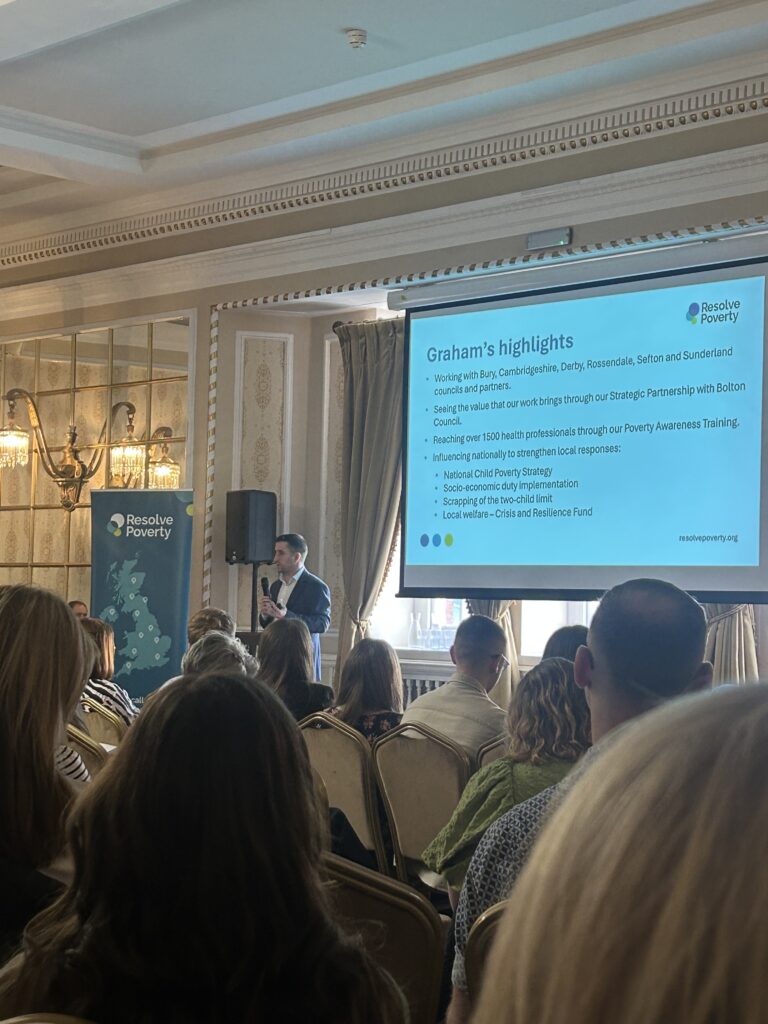
For example, in partnership with Bolton Metropolitan Borough Council, Resolve Poverty has helped design a borough-wide ‘Tackling Poverty Strategy’ that sets out long term plans and priorities for reducing poverty across Bolton, developing practical tools and providing ongoing support based on research and public consultation.
Research and Campaigns Manager at Citizens Advice Newcastle Hannah Cooper shared insights on how organisations can best support localities to respond to poverty, sharing that it is key to listen and understand to their needs in order to respond to each individual case with both empathy and positive influence.
We were particularly struck by an inspiring talk by Marsha Powell, CEO of charity BelEve, who summed up the collective action that can be achieved. “Real change happens when we connect the dots across education, community and industry and take shared responsibility for closing those gaps. Potential is not the issue. Alignment is. Let’s build systems that recognise it, respond to it, and protect it together.”
At High-Rise Communications, we believe in the power of purposeful communications to create real-world impact. Through strategic, relevant communications, we empower purposeful organisations to achieve their goals. Resolve Poverty emphasised that collective action and communication has the power to spark a more open and understanding narrative surrounding poverty, and inspires real change.
At High-Rise Communications, we can provide support with events and representing your unique story in the media. If this is something you’d be interested in, contact us here.